What Is AI in Dermatology?
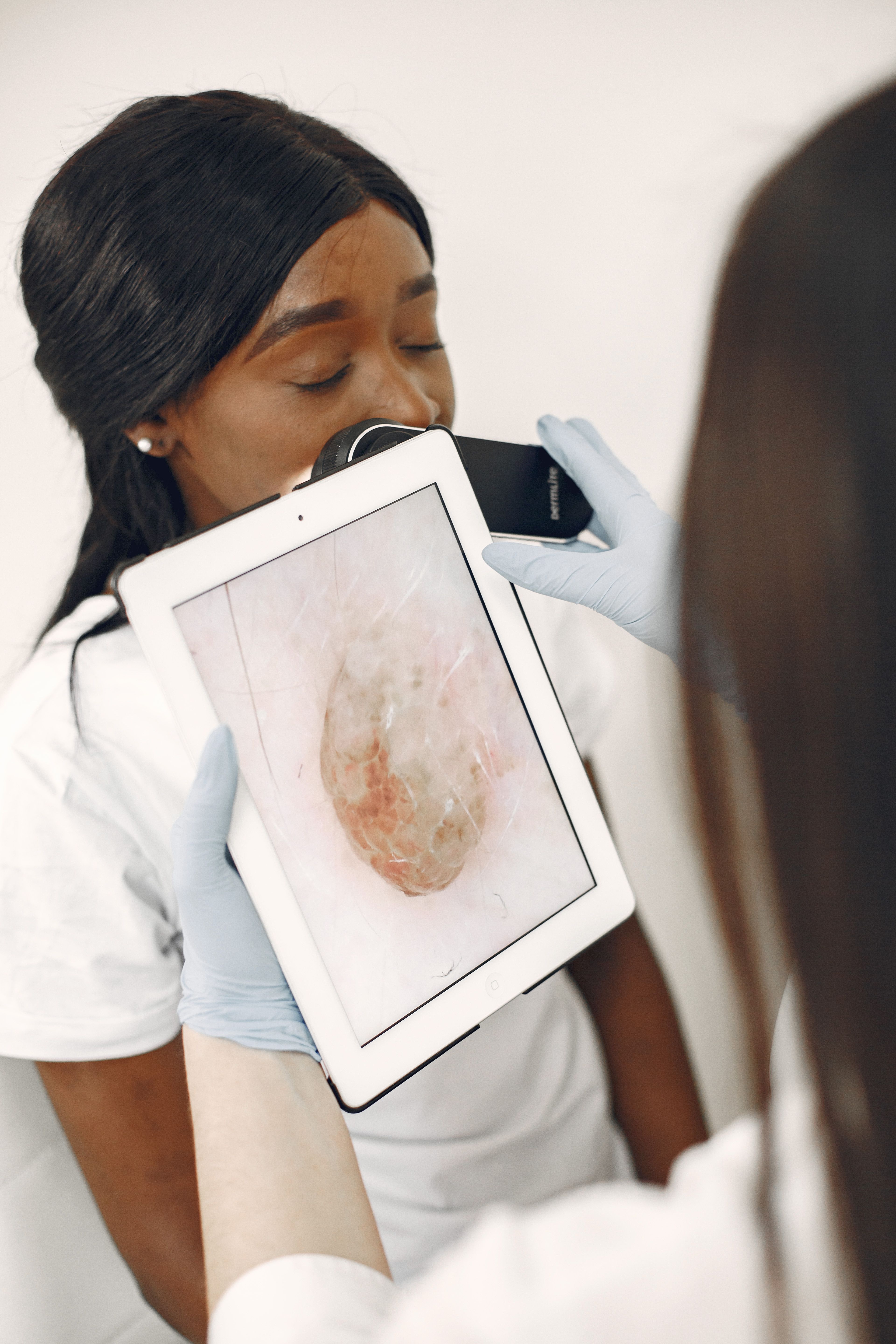
At its core, artificial intelligence is technology that can find patterns in large amounts of information, often faster and more consistently than a person scanning through the same data by hand. In dermatology, this usually shows up as image analysis, where an AI system looks at photos of skin and picks out visual patterns. It's worth being clear about what this actually means, though. AI-assisted monitoring is not the same thing as a medical diagnosis. It can help organize and interpret information, but it isn't a substitute for a trained dermatologist evaluating your skin in person.
How AI Can Help Monitor Skin Changes
There are a few practical ways AI shows up in skin monitoring:
- Skin image analysis. AI can analyze photos and identify visual patterns, which is why taking consistent, well-lit photos over time can be so useful.
- Symptom tracking. AI-powered tools can help organize information about itching, redness, dryness, lesions, and flare-ups instead of leaving it scattered across notes and memory.
- Pattern recognition. Some tools attempt to identify relationships between symptoms and other recorded factors, like stress, sleep, weather, or skincare habits.
- Long-term monitoring. Digital records make it much easier to compare how skin looks and feels over weeks or months, rather than relying on memory alone.
AI and Chronic Skin Conditions
This kind of monitoring can be especially useful for people managing conditions like psoriasis, eczema, rosacea, acne, vitiligo, and other chronic or recurring skin issues. These conditions tend to shift over time, sometimes gradually and sometimes in sudden flare-ups, so having a consistent way to document changes can make a real difference in understanding your own skin.
How Psoricare.ai Fits into the Future of Skin Health
Psoricare.ai brings this kind of digital tracking into everyday life. Users can record symptoms, upload photos of their skin, log flare-ups, note possible triggers, and monitor changes over time, all in one organized place. The goal isn't to replace your dermatologist. It's to help you show up to appointments with clearer, more useful information about your own skin health journey.
Can AI Replace a Dermatologist?
No, and it's worth saying that plainly. AI is a supportive tool, not a replacement for qualified care. Dermatologists take into account your medical history, a physical exam, your symptoms, and other context that AI systems simply don't have access to. Research backs this up. Studies comparing AI to clinicians on skin cancer detection have found AI performing comparably, and sometimes slightly better, on specific tasks, but accuracy varies depending on image quality, the population studied, and how the tool was tested. If you notice something new, changing, or concerning on your skin, that's a reason to see a professional, not just log it in an app.
The Benefits and the Limitations
Used well, AI-powered monitoring can support more consistent tracking, easier documentation, and more informed conversations with your provider. But there are real limitations too. Image quality affects how well AI can analyze a photo, and different skin conditions can look similar to each other. Research has also raised concerns that AI models don't always perform equally well across different skin tones, since training data isn't always representative. Privacy and protection of health data matter as well, and technology should always be seen as a complement to professional care, not a stand-in for it.
Looking Ahead
Researchers are exploring more personalized monitoring, better image analysis, integration with wearable devices, and closer connections between digital health tools and healthcare providers. None of this is guaranteed, but it points toward a future where tracking your skin health could become easier and more informative over time.
Your skin health journey is personal. Start documenting your symptoms, tracking changes, and gaining a clearer picture of your skin with Psoricare.ai.