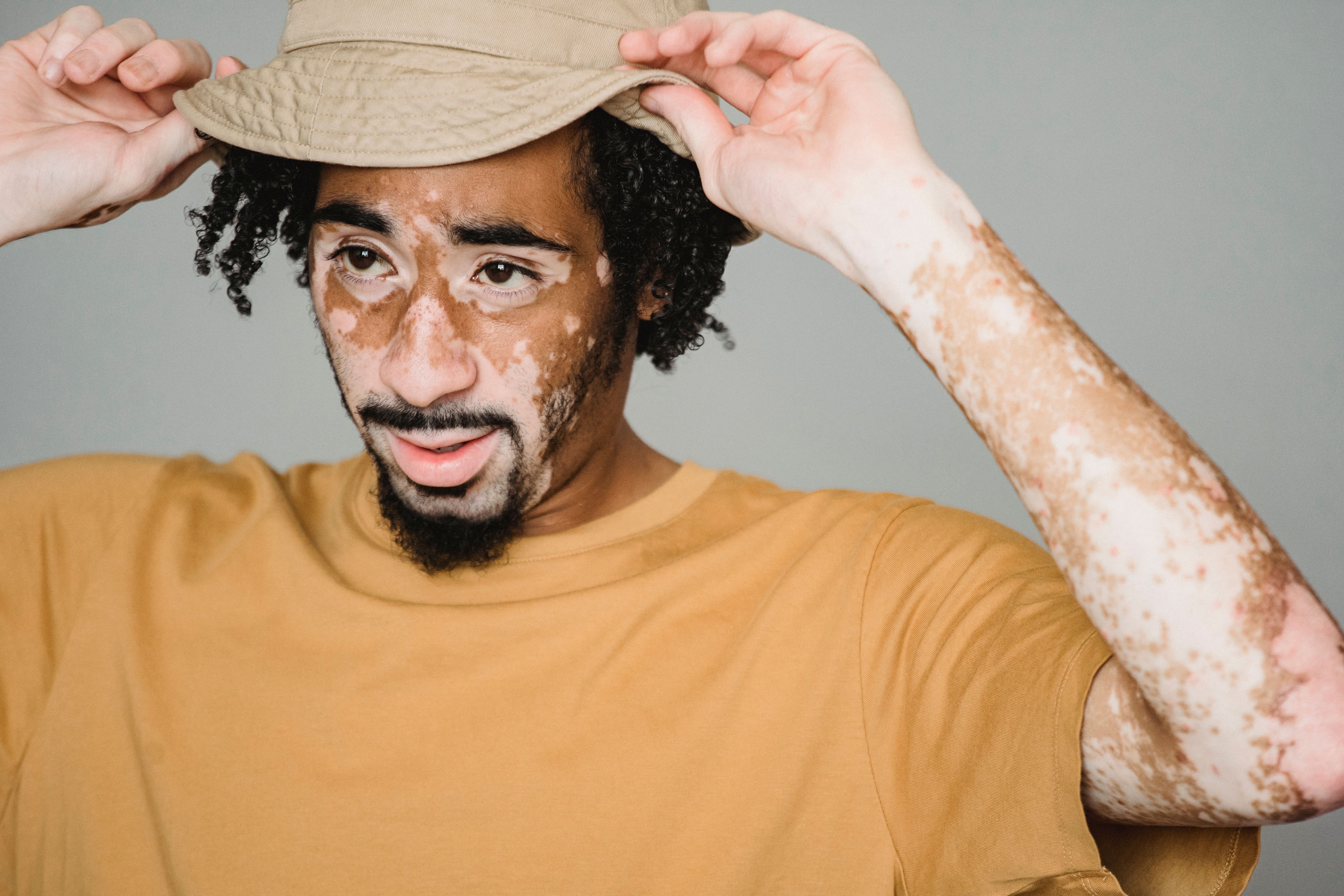
What Is Skin Discoloration?
Skin discoloration simply means a change from your skin's usual color or tone. It can show up as darker, lighter, redder, or otherwise different from the surrounding skin. Two main things tend to drive these changes: pigmentation, which relates to melanin production, and inflammation, which relates to your skin's response to irritation or injury. It's worth being clear that discoloration itself is a visible change, not a diagnosis. It's a symptom that can point toward a range of different underlying causes.
Hyperpigmentation refers to areas that appear darker than the surrounding skin. Hypopigmentation refers to areas with reduced pigmentation, appearing lighter. Redness describes areas that look red or inflamed. Uneven skin tone describes general differences in color across different parts of the skin.
What Causes Dark Spots on the Skin?
Sun exposure is one of the most common causes. Ultraviolet radiation can trigger increased melanin production, leading to sunspots and other forms of sun-related discoloration over time.
Post-inflammatory hyperpigmentation refers to dark marks that remain after skin has gone through inflammation or injury, often triggered by acne, eczema, insect bites, or general irritation. This tends to be more noticeable and more persistent in darker skin tones. Research on skin of color has found that this type of pigmentation can affect the majority of people with acne in some populations, and it's one of the most common dermatology concerns among people with darker skin.
Hormonal changes can contribute to melasma, a condition that causes darker, often symmetrical patches, typically on the face. Hormonal factors and sun exposure frequently work together to drive melasma.
Skin injuries and irritation, including cuts, burns, scratching, or general inflammation, can leave darker marks behind as skin heals. How noticeable and how long-lasting this is varies quite a bit from person to person.
What Causes Redness or Inflamed-Looking Skin?
Eczema and dermatitis commonly cause inflammation that shows up as redness, itching, dryness, and general irritation. It's worth noting that redness can look different depending on skin tone, sometimes appearing more brown, purple, or grayish rather than the bright red often shown in general skincare content.
Rosacea typically causes facial flushing and persistent redness, though how it presents varies from person to person.
Psoriasis can cause raised, scaly patches, and how these appear can also differ depending on skin tone.
Irritation and allergic reactions to skincare products, fragrances, or other substances can trigger redness, often alongside itching, burning, or swelling.
What Causes Lighter Patches or Loss of Skin Color?
Vitiligo causes patches of skin to lose pigmentation, sometimes gradually and sometimes more noticeably over time. It's worth being clear that vitiligo is not contagious.
Post-inflammatory hypopigmentation can leave lighter patches behind after certain inflammatory skin conditions or injuries have healed. This is a different process from vitiligo, even though the two can look similar. One helpful distinction is that post-inflammatory hypopigmentation often regains color gradually over weeks or months, while vitiligo typically does not resolve on its own in the same way.
Other possible causes of lighter patches include certain infections and additional skin conditions. Because these can look so similar to each other, a professional assessment is a much more reliable way to identify the cause than trying to work it out from appearance alone.
How Skin Discoloration Can Look Different Across Skin Tones
Redness doesn't always look red. Depending on skin tone, it can appear pink, red, purple, brown, or simply darker than the surrounding skin, and inflammation in general can be less visually obvious on some skin tones than others. Pigmentation changes also tend to be more noticeable when they contrast strongly with surrounding skin. Because of all this, it helps to pay attention to more than just color: texture, swelling, warmth, itching, pain, and how a change develops over time all matter. No single condition looks the same on every person.
How to Tell Whether a Skin Color Change Needs Attention
A few questions can help you get a clearer sense of what you're dealing with.
- When did the change first appear? Is it spreading or changing?
- Is it painful, itchy, warm, or swollen?
- Has the skin become raised, scaly, cracked, or wounded? Are there other symptoms alongside it?
- Did a new product, medication, or skin injury happen right before the change showed up?
These observations can help you describe what's going on clearly, but they can't establish a diagnosis on their own.
How to Care for Skin With Discoloration
Protect skin from sun exposure. Broad-spectrum sunscreen and protective clothing can help reduce further sun-related pigmentation, especially for conditions like melasma and sunspots that are closely tied to UV exposure.
Use gentle skincare. Avoid harsh scrubbing and any products that seem to irritate your skin, and choose products suited to your specific needs.
Avoid picking or scratching. Repeated irritation can worsen inflammation and contribute to further discoloration.
Be careful with skin-lightening products. Steer clear of unverified products or harsh treatments, and get professional advice before trying anything stronger for pigmentation concerns.
Set realistic expectations. Some forms of discoloration take real time to fade, and treatment approaches depend heavily on the underlying cause.
When Should You See a Dermatologist?
It's worth getting a professional assessment if discoloration is new, unexplained, or persistent; if a patch is growing or changing noticeably; if a mole or pigmented spot changes in size, shape, or color; if skin changes come with significant pain, swelling, or persistent itching; if there are signs of infection like increasing warmth, pus, or spreading redness; if discoloration develops after starting a new medication, or if the changes are simply causing you significant concern. Seek urgent medical attention for a rapidly spreading rash with severe symptoms, facial or throat swelling, or difficulty breathing.
How to Track Changes in Skin Color
Keeping a record of skin changes over time makes them much easier to describe and understand. Worth documenting: the date you first noticed the change, its location and size, a description of the color and texture, any itching, pain, swelling, or other symptoms, whether the area is spreading or fading, skincare products and treatments you're using, recent sun exposure or skin irritation, and any other relevant changes in your routine. Periodic photographs taken under consistent lighting can help too. Photos are a useful record, but they're not a substitute for a clinical examination.
How Psoricare.ai Can Help You Monitor Skin Changes
This kind of ongoing documentation is exactly what Psoricare.ai is built for. You can record skin symptoms and observations, document flare-ups and visible changes, add photos when appropriate, track symptoms over time, and note possible triggers or product changes, all organized in one place as a digital skin health history. That record can make conversations with a healthcare professional far more productive. It's worth being clear about what this tool doesn't do: Psoricare.ai can't diagnose a pigmentation disorder or determine the cause of discoloration. It's there to help you track and organize what you're seeing.
Understand Your Skin's Changes Over Time
Skin discoloration can show up as darker spots, redness, lighter patches, or general unevenness in tone, and a wide range of different conditions and environmental factors can produce similar-looking changes. Appearance alone often isn't enough to reveal what's actually going on. Gentle care and sun protection can help in a lot of situations, and tracking changes over time gives you a clearer way to describe your experience, both to yourself and to a healthcare professional. New, persistent, or concerning changes are always worth a professional assessment.
Noticing changes in your skin color? Use Psoricare.ai to record symptoms, photos, and changes over time, helping you build a clearer picture of your skin health journey.